
Keeley Compressor Plus: A Comprehensive Guide
Keeley delivers professional recording quality and effortless playability with its compression technology; the Compressor Plus represents a significant leap forward.
This guide explores the pedal’s features, controls, modes, technical aspects, troubleshooting, and resources, referencing the official manual dated November 24, 2023.
The Keeley Compressor Plus builds upon the legacy of Keeley’s renowned compressor designs, representing a true advancement in their two and four-knob compressor lines. This pedal isn’t simply about reducing dynamic range; it’s about enhancing your instrument’s tone and making it stand out in a mix, achieving a professionally recorded sound with ease.
Designed for guitarists seeking to add sustain, clarity, and a polished sheen to their playing, the Compressor Plus offers a versatile toolkit for shaping your sound. It’s engineered to make playing more enjoyable and intuitive, allowing musicians to focus on their performance rather than wrestling with complex settings. The official manual, available as a PDF, provides detailed insights into its operation.
The pedal’s design philosophy centers around simplicity and effectiveness, offering three distinct modes to cater to various playing styles and musical genres. Understanding the interplay between its controls – Sustain, Attack, Tone, and Blend – is key to unlocking its full potential.
What is Compression and Why Use It?
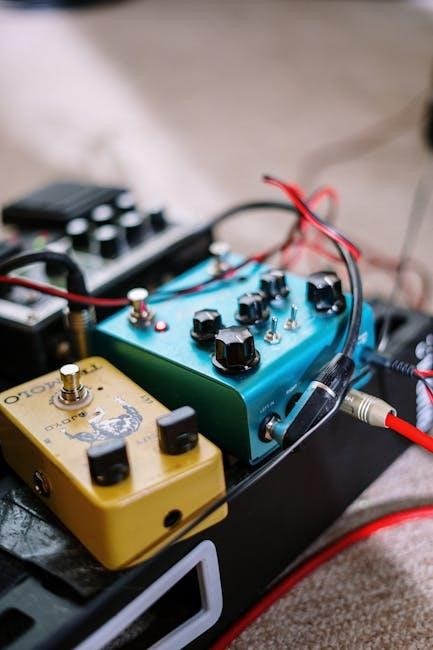
Compression, in audio, reduces the dynamic range of a signal – the difference between its loudest and quietest parts. The Keeley Compressor Plus utilizes this principle to even out your playing, bringing quieter notes closer in volume to louder ones. This results in increased sustain, a more consistent level, and a fuller, more polished sound.
Why use it? Compression helps your instrument “jump” from the mix, making it more audible and impactful. It can also add warmth and character, enhancing the natural tone of your guitar. It’s a crucial tool for both recording and live performance, ensuring a consistent and professional sound.
The Compressor Plus doesn’t just squash dynamics; it’s designed to be transparent and musical, preserving the nuances of your playing while providing subtle or dramatic compression as needed. It protects speakers from sudden peaks, as noted in the manual.
Key Features of the Keeley Compressor Plus
The Keeley Compressor Plus builds upon previous Keeley compressor designs, offering a true advancement in functionality and versatility. A standout feature is its three operational modes, providing a range of compression styles from subtle to full. The inclusion of a dedicated Blend control is a key upgrade, allowing users to mix the compressed signal with the original clean signal for a more natural sound.
The pedal boasts a comprehensive control set – Sustain, Attack, Tone, and Blend – offering precise shaping of the compressed signal. Internally, the signal path incorporates both inverting and non-inverting stages, contributing to its unique sonic character.
Based on the Keeley c4 compressor, the Plus utilizes high-quality components for reliable performance. The November 24, 2023 schematic diagram (Version 1.0) details its internal workings.

Understanding the Controls
Keeley Compressor Plus controls – Sustain, Attack, Tone, and Blend – allow detailed sculpting of your compressed signal, offering precise tonal adjustments and dynamic control.
Sustain Control: Setting the Compression Level
The Sustain control on the Keeley Compressor Plus dictates the amount of gain reduction applied to the input signal, essentially setting the compression level. At the 9 o’clock position, the effect is barely noticeable, subtly taming only the loudest, most transient peaks – ideal for speaker protection and gentle leveling.
Turning the Sustain control towards 12 o’clock introduces a more pronounced compression, providing a consistent presence suitable for continuous use during performance. This setting offers a balanced compression that enhances sustain without sounding overly squashed or artificial. Experimentation is key; higher settings deliver more aggressive compression, useful for creating distinct dynamic effects and maximizing volume. Remember, the Sustain control is central to shaping the overall feel and impact of your compressed signal.
Attack Control: Shaping the Compression Response
While specific details regarding the Attack control weren’t explicitly detailed in the provided information, understanding its function within compression is crucial. The Attack control determines how quickly the compressor begins to reduce gain when a signal exceeds the threshold. A faster attack time clamps down immediately, controlling transients and creating a more consistent level.
Conversely, a slower attack time allows more of the initial transient to pass through before compression kicks in, preserving pick attack and percussive elements. This control is vital for tailoring the compressor’s response to different instruments and playing styles. Experimenting with the Attack control allows you to fine-tune the compressor’s feel, from smooth and transparent to punchy and defined.
Tone Control: Sculpting the Compressed Sound
The Tone control on the Keeley Compressor Plus plays a significant role in shaping the overall sonic character of the compressed signal. Notably, the signal path reveals the compressor output feeds into the Tone control, which is configured as an inverting stage. This placement means the Tone control doesn’t just affect the compressed signal’s brightness; it actively alters its tonal balance after compression has been applied.
This inverting stage allows for precise sculpting, potentially offering a subtle warmth or a brighter, more articulate sound. Understanding this interaction is key to maximizing the pedal’s versatility. Experimentation with the Tone control will reveal its impact on the final compressed output, allowing users to tailor the sound to their specific needs.
Blend Control: Balancing Compressed and Clean Signals
The Blend control on the Keeley Compressor Plus allows for a nuanced mix between the compressed and original, clean signal. While the official documentation is somewhat limited regarding specifics, turning the control counter-clockwise (CCW) delivers more of the clean, unaffected signal. This is ideal for subtle compression where preserving the instrument’s natural dynamics is paramount;
As you rotate the Blend control clockwise, the proportion of the compressed signal increases, resulting in a more pronounced compression effect. The Blend stage itself incorporates another inverting stage, utilizing the second half of the op-amp. This feature provides a smooth and natural transition between the clean and compressed tones, offering exceptional control over the final output.
Operational Modes & Settings
Keeley Compressor Plus offers three distinct modes: subtle, moderate, and full compression, each providing unique tonal characteristics for diverse musical applications and playing styles.
Mode 1: Subtle Compression
Mode 1 on the Keeley Compressor Plus is designed for gentle, transparent compression, ideal for players seeking to enhance dynamics without drastically altering their tone. This setting excels at smoothing out performance inconsistencies and adding sustain without sounding overtly compressed.
The manual suggests starting with the Sustain control around the 9 o’clock position for barely noticeable effect – primarily taming harsh peaks and protecting speakers. This is a fantastic starting point for rhythm playing or situations where a natural feel is paramount.
Experiment with slightly increasing the Sustain to find the sweet spot where notes are evened out and sustain is subtly improved. The Attack and Tone controls can be used to further refine the compression character, while the Blend control allows for a seamless integration of the compressed and clean signals, preserving the original instrument’s character;
This mode is particularly effective for acoustic guitars, clean electric tones, and situations where a natural, uncolored compression is desired.
Mode 2: Moderate Compression
Mode 2 on the Keeley Compressor Plus delivers a more noticeable compression effect, offering a balance between dynamic control and tonal coloration. This setting is versatile, suitable for a wider range of playing styles and genres, providing a solid foundation for both rhythm and lead work.
With Mode 2 engaged, the Sustain control can be increased beyond the settings used in Mode 1. Experiment with positions between 12 o’clock and 3 o’clock to achieve a more pronounced compression. This will result in increased sustain, a more consistent volume level, and a slightly more defined attack.
Utilize the Attack control to shape the compression response, adjusting how quickly the compressor engages. The Tone control can be used to subtly sculpt the compressed sound, while the Blend control remains crucial for maintaining a natural feel by mixing the compressed and clean signals.
This mode is excellent for adding punch to chords, enhancing lead lines, and creating a polished, professional sound.
Mode 3: Full Compression
Mode 3 on the Keeley Compressor Plus represents the most aggressive compression setting, designed for significant dynamic control and tonal shaping. This mode is ideal for players seeking a pronounced, squashed sound, often used for country picking, funk rhythms, or creating unique textural effects.
In Mode 3, the Sustain control becomes highly sensitive. Settings from 3 o’clock onwards will deliver substantial compression, noticeably altering the guitar’s dynamics. Careful adjustment is key to avoid excessive gain reduction and unwanted artifacts.
The Attack control plays a crucial role in shaping the compressed response, while the Tone control allows for significant tonal sculpting. The Blend control is particularly important in Mode 3, helping to retain some of the original signal’s clarity and prevent the sound from becoming overly processed.
Experimentation is encouraged to discover the full potential of this mode, pushing the boundaries of compression for unique sonic results.

Technical Specifications & Internals
Keeley Compressor Plus, version 1.0 (November 24, 2023), features an inverting tone stage and a non-inverting clean buffer, detailed in its schematic.

Schematic Diagram Overview (Version 1.0 ⏤ Nov 24, 2023)
The schematic diagram, specifically version 1.0 dated November 24, 2023, reveals the Keeley Compressor Plus’s intricate internal design. It showcases a dual-op-amp configuration central to its compression and blending capabilities. The compressor output path feeds into a tone control implemented as an inverting stage, while the clean signal path utilizes a non-inverting buffer.
This arrangement is crucial for achieving the pedal’s signature sound. The blend stage then re-inverts the signal, utilizing the second half of the op-amp to combine the compressed and clean signals effectively. Resistors and capacitors, meticulously chosen, define the frequency response and gain characteristics throughout the circuit. Understanding this layout is key for advanced troubleshooting and modification, offering insight into how each component contributes to the overall sonic texture.
Detailed component values are clearly labeled on the schematic, aiding in repair or custom builds.
Component Details: Resistors and Capacitors
Resistors within the Keeley Compressor Plus, as detailed in the schematic (Version 1.0, Nov 24, 2023), are critical for setting gain stages, biasing transistors, and shaping the frequency response of the tone control. Their precise values dictate the compression ratio and overall tonal character; Capacitors, equally vital, manage signal coupling, filtering, and timing within the compressor circuit.
Electrolytic capacitors are used for power supply filtering and audio coupling, while ceramic and film capacitors contribute to signal clarity and stability. The selection of these components directly impacts the pedal’s noise floor and dynamic range. Specific resistor and capacitor values are meticulously chosen to achieve the desired compression characteristics and tonal sculpting capabilities. Analyzing these components allows for a deeper understanding of the circuit’s functionality and potential modifications.
Component quality is paramount for optimal performance;
Signal Path & Inverting/Non-Inverting Stages

The Keeley Compressor Plus’s signal path is thoughtfully designed, utilizing both inverting and non-inverting stages to achieve its unique compression characteristics. Initially, the input signal enters a non-inverting buffer, preserving signal integrity. Subsequently, the compressed output proceeds through the tone control, which is configured as an inverting stage. This inverting configuration contributes to the pedal’s distinct tonal coloration.
The blend stage then re-inverts the signal, utilizing the second half of the operational amplifier. This clever arrangement allows for seamless blending of the compressed and clean signals. The interplay between these inverting and non-inverting stages is crucial for achieving the pedal’s dynamic response and overall sonic texture. Understanding this signal flow is key to comprehending the pedal’s nuanced behavior.
Careful stage design minimizes noise and distortion.
Troubleshooting & Common Issues
Addressing potential problems like no signal, excessive noise, or a malfunctioning blend control is crucial for optimal performance of the Keeley Compressor Plus.
No Signal Output
If you experience no signal output from the Keeley Compressor Plus, begin by systematically checking the most common culprits. First, ensure the pedal is receiving power – verify the DC jack connection and the power supply itself. A faulty power supply or loose connection can immediately cause a complete signal loss.
Next, inspect the input and output cables. Try different cables to rule out a cable issue. Confirm that the cables are securely plugged into both the pedal and your amplifier or subsequent effects. Also, double-check your amplifier’s volume and input selection to ensure it’s not muted or set to an incorrect channel.
If the issue persists, examine the pedal’s footswitch. Ensure it’s fully engaging and disengaging. A malfunctioning footswitch can prevent the signal from passing through. Finally, consider the possibility of an internal component failure, which may require professional repair.
Excessive Noise
Experiencing excessive noise with your Keeley Compressor Plus? Several factors can contribute to this issue. First, assess your power supply. A noisy or inadequate power supply is a common source of unwanted hum or hiss. Try a different, high-quality power supply to see if the noise diminishes.
Next, examine your cabling. Poorly shielded cables can pick up interference, resulting in noise. Ensure all cables are in good condition and properly shielded. Also, consider the proximity of the pedal to other electronic devices, as they can introduce interference.
Adjusting the Compressor Plus’s controls can also help. Lowering the Sustain control can reduce noise, as higher compression levels amplify both signal and noise. Experiment with the Blend control to find a balance between compression and clean signal, minimizing audible noise;
Blend Control Not Functioning as Expected
If the Blend control on your Keeley Compressor Plus isn’t behaving as anticipated, a few things should be checked. The control mixes the compressed and clean signals, with counter-clockwise (CCW) representing a fully clean signal. If no change is noticeable when adjusting the knob, verify the pedal is receiving power and functioning correctly overall.
The Compressor Plus utilizes an inverting stage in its signal path after the compression, and then inverts again at the blend stage. This design can sometimes create unexpected interactions. Ensure the Sustain control isn’t set so high that it overwhelms the clean signal, effectively masking the blend effect.
Experiment with different input signal levels and compression settings to see if the Blend control becomes more responsive. A weak input signal might make the blend less noticeable.

Resources & Further Information
Access the official Keeley Compressor Plus manual in PDF format for detailed guidance, alongside helpful demo videos showcasing its capabilities and settings.
Official Keeley Compressor Plus Manual (PDF)
The official Keeley Compressor Plus manual, available as a PDF download, serves as the definitive resource for understanding and optimizing this versatile pedal. It provides a comprehensive overview of the pedal’s functionality, detailing each control – Sustain, Attack, Tone, and Blend – and explaining how they interact to shape your compressed signal.
The manual meticulously outlines the three operational modes: Subtle, Moderate, and Full Compression, offering suggested settings for various musical styles and applications. It also includes a schematic diagram (Version 1.0, dated November 24, 2023) for those interested in the pedal’s internal workings, alongside component details regarding resistors and capacitors.
Furthermore, the PDF clarifies the signal path, noting the inverting stage within the tone control and the non-inverting clean path buffer. It explains how the blend stage utilizes inversion, offering a deeper understanding of the pedal’s signal processing. You can find a link to the full PDF document through various online resources, including Wakelet.
Keeley Compressor Plus Demo Videos
Numerous demo videos showcasing the Keeley Compressor Plus are readily available online, offering practical demonstrations of its capabilities. These videos complement the official manual by illustrating the sonic impact of different settings and modes in real-world musical contexts.
Many demonstrations focus on the three compression modes – Subtle, Moderate, and Full – highlighting their distinct characteristics and ideal applications. Some videos pair the Compressor Plus with overdrive pedals, like the Prince of Tone, to demonstrate its versatility within a larger pedalboard setup.
Visual learners will benefit from observing how adjustments to the Sustain, Attack, Tone, and Blend controls affect the compressed signal. These videos provide valuable insights beyond the written instructions in the manual, helping users quickly grasp the pedal’s nuances and unlock its full potential. Explore platforms like YouTube for a wealth of instructional and performance-based content.